During Science Month: ALMA Opens Its Doors to Celebrate 15 Years of Observing the Universe
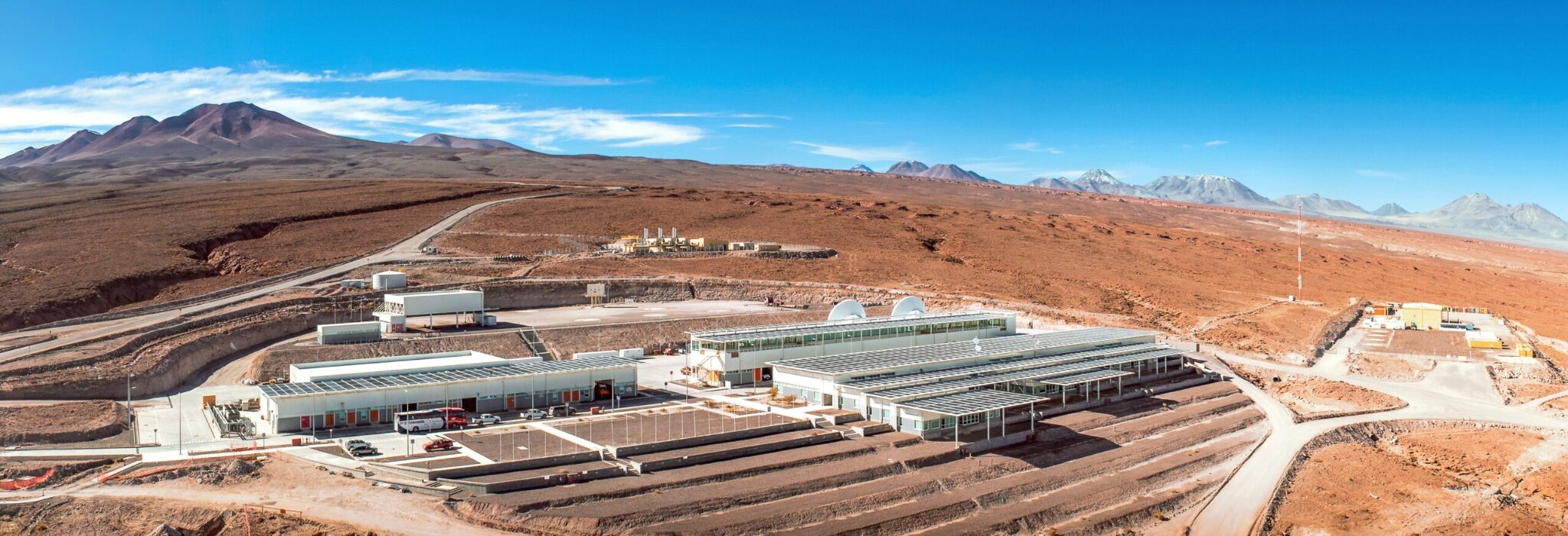
Throughout October, Chile’s Science Month, the Atacama Large Millimeter/submillimeter Array (ALMA) will open its doors to the community with two special public visits to its Operations Support Facility (OSF), near San Pedro de Atacama. The celebration also coincides with a special milestone: 15 years since ALMA’s first scientific observations, which marked the beginning of a new era in astronomy.
On Saturdays, October 17 and 24, visitors will have the opportunity to discover some of the infrastructure, technology, and human expertise that make the operation of one of the world’s most advanced astronomical observatories possible.
The visits will be free of charge and offered in two sessions each day, with bus transportation from downtown San Pedro de Atacama.
During the tour, visitors will enter ALMA’s Operations Support Facility (OSF), where much of the staff responsible for the Observatory’s operations works. The experience will include spaces such as the control room, laboratories, and technical areas. Depending on operational activities that day, visitors may also have the opportunity to see antennas undergoing maintenance and one of the massive vehicles used to transport them.
It will be an opportunity to discover what happens behind ALMA’s images and scientific discoveries and to meet some of the people who keep the Observatory operating every day.
For safety reasons, the visits will not include the Array Operations Site (AOS) on the Chajnantor Plateau, where ALMA’s antennas are located at an altitude of approximately 5,000 meters (16,400 feet) above sea level.
A morning session will depart from San Pedro de Atacama at 8:00 a.m., returning at approximately 12:45 p.m., while an afternoon session will depart at 2:00 p.m. and return at around 6:45 p.m.
Capacity is limited, and tickets must be reserved in advance through the Welcu platform. Registration for the October 17 event will open on Friday, October 9 at noon, while registration for the October 24 event will open on Monday, October 19 at noon.
More Ways to Connect with ALMA During Science Month
The celebrations will begin on October 8, when ALMA takes part in the 4th San Pedro de Atacama Science Fair, to be held from noon to 6:00 p.m. in the town’s main square.
At its booth, ALMA will present ALMAsteroid, an interactive game that offers a fun way to engage with astronomy and science while sharing with the San Pedro de Atacama community some of the knowledge generated at one of the world’s leading observatories, located in their region.
Later in the month, on October 22 and 23, ALMA will also take part in OH! Stgo 2026, a festival that opens some of Santiago’s most remarkable spaces to the public, including places that are not usually accessible to visitors.
The program will include guided tours of the offices of the European Southern Observatory (ESO) and ALMA in Vitacura, a scientific campus where teams work in astronomy, engineering, and the operations of some of the major observatories based in Chile.
Among the spaces visitors will be able to explore are the ALMA building and its control room, from which teams in Santiago can remotely support Observatory operations in Chile’s Antofagasta Region.
Visits during OH! Stgo will require advance registration. Schedules and participation details will be announced soon through the festival’s official channels.
With activities in both San Pedro de Atacama and Santiago, ALMA will celebrate not only Science Month this October, but also 15 years of observations that have opened new windows onto the Universe, bringing the public closer to the people, technology, and international collaboration behind every discovery.
Additional Information
ALMA is a partnership of ESO (representing its member states), NSF (USA), and NINS (Japan), together with NRC (Canada), NSTC and ASIAA (Taiwan), and KASI (Republic of Korea), in cooperation with the Republic of Chile. The Joint ALMA Observatory is operated by ESO, AUI/NRAO, and NAOJ.
Contacts
-
Nicolás Lira
Education and Public Outreach OfficerJoint ALMA Observatory, Santiago - ChilePhone: +56 2 2467 6519Cel: +56 9 9445 7726Email: [email protected]