A swirling galaxy
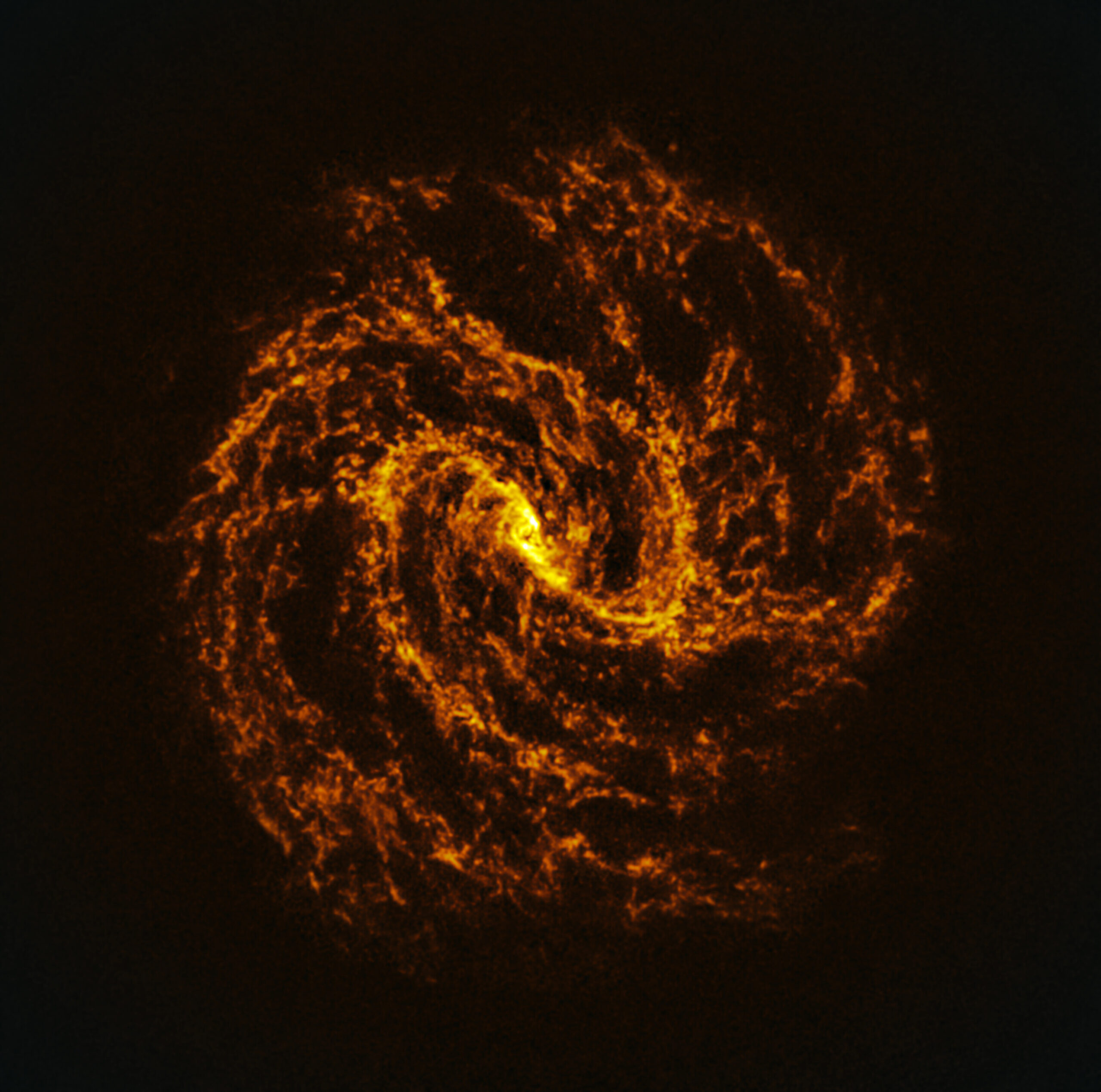
Like a portal to another dimension, a hypnotizing swirl features
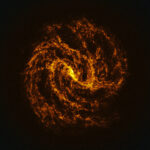
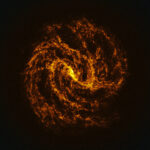
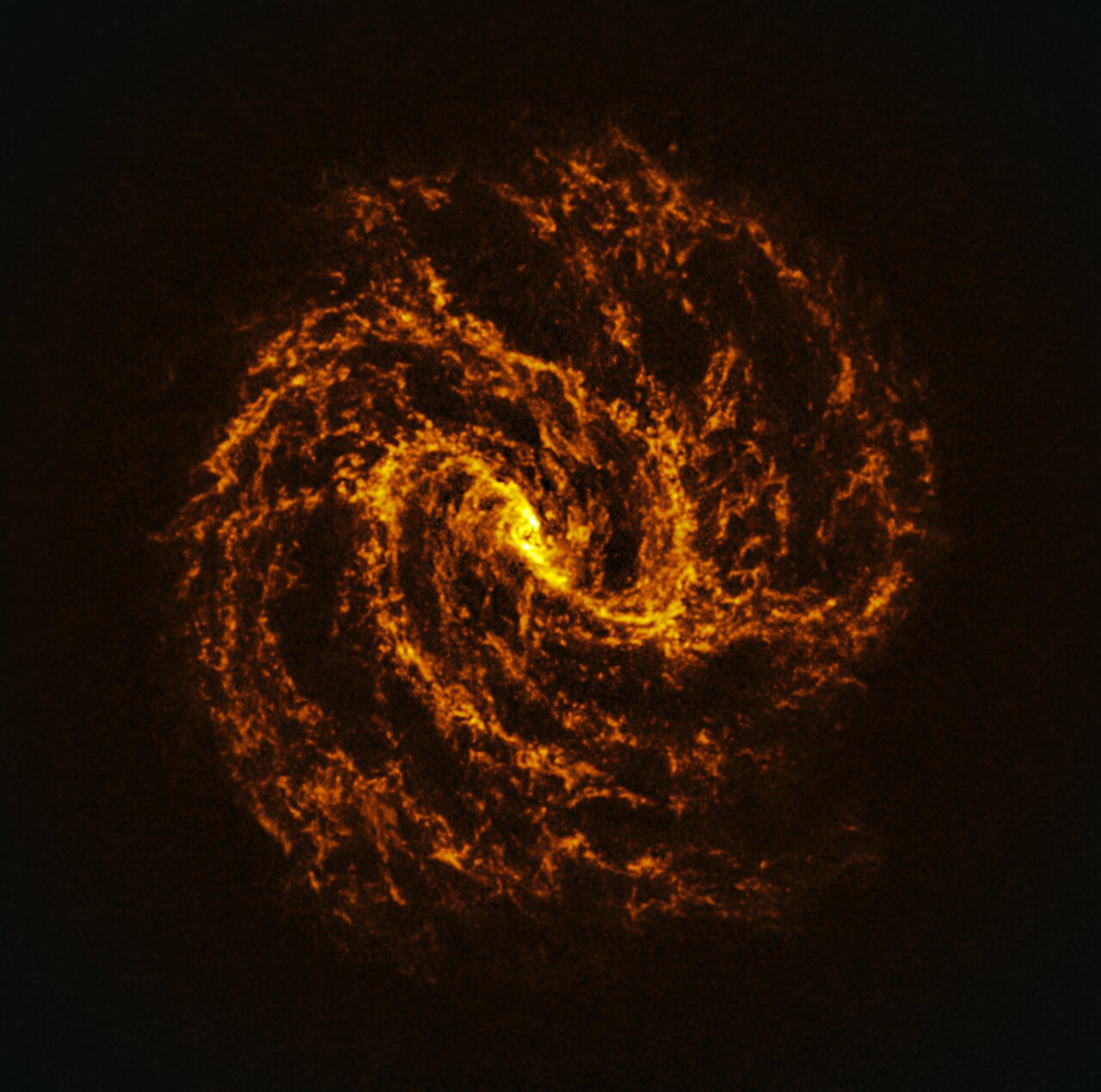
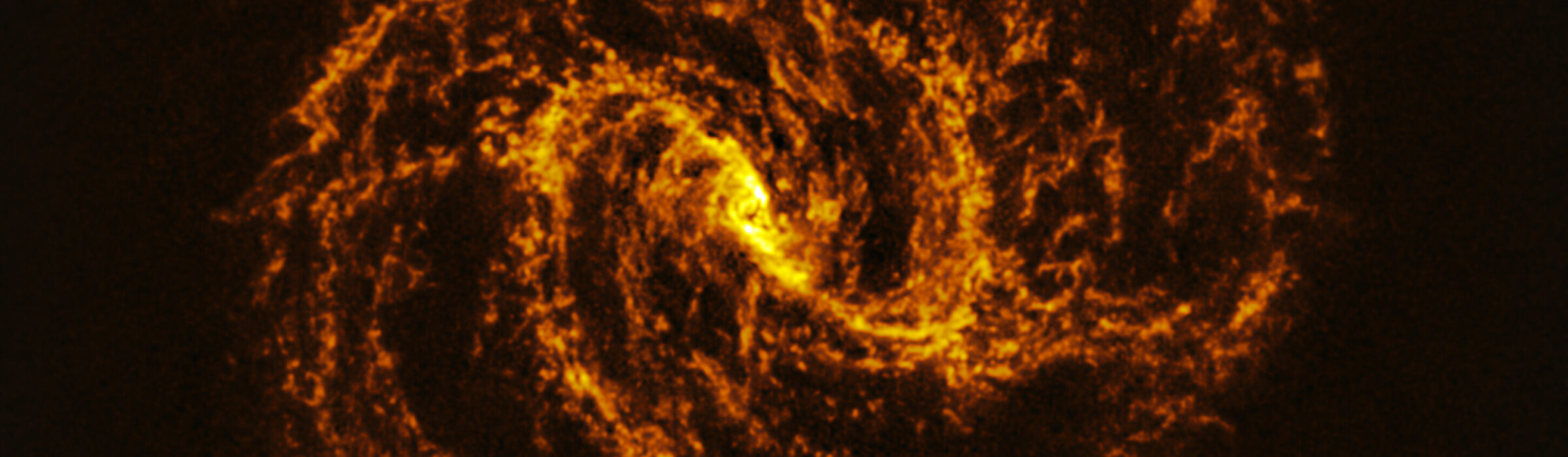
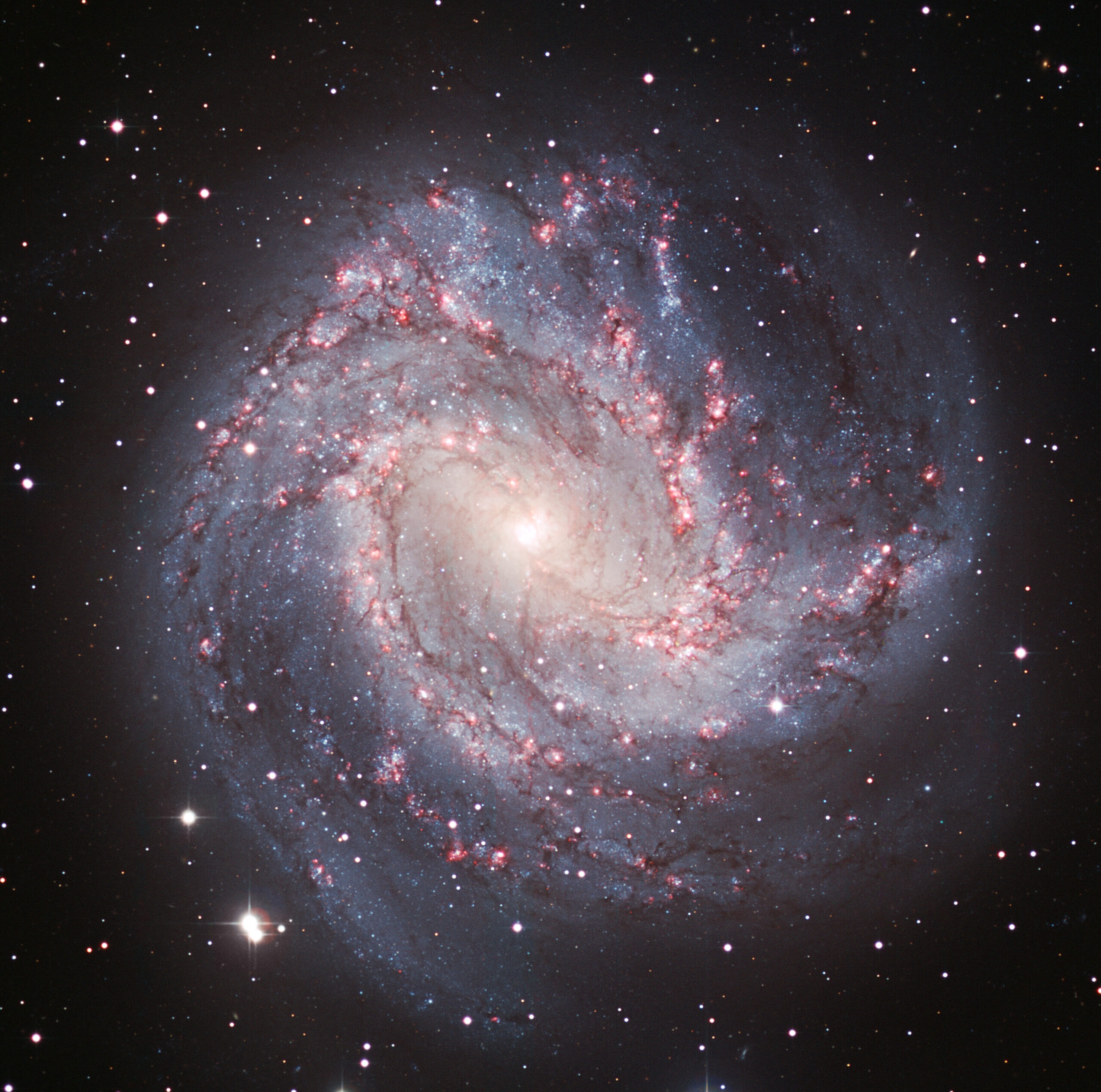
This is the spiral galaxy M83, also known as the Southern Pinwheel, located approximately 15 million light-years away. It is one of the brightest galaxies in the night sky, but this image, taken with the Atacama Large Millimeter/submillimeter Array (ALMA), doesn’t show how M83 looks in the light our eyes can see. Instead, it depicts the light emitted by cold gas molecules, the ingredients of star formation.
Astronomers are interested in molecular gas clouds as virtually all stars are born from their collapse. Once stars form, they heat up their surroundings, making it harder for gas to condense and form further stars. This, combined with galactic dynamics that continually stirs gas, controls the growth of galaxies. ALMA allows astronomers to map how the density and temperature of these gas clouds change in different locations within a galaxy, such as the central regions, the spiral arms, or the space between them. This in turn helps us understand whether stars form differently in different galactic environments.
M83 closely resembles our own galaxy, the Milky Way. Since M83 appears nearly face-on in the sky, astronomers enjoy a privileged view to study whether the recipe to turn gas into stars is universal or changes within M83.
Additional Information
ALMA is a partnership of ESO (representing its member states), NSF (USA), and NINS (Japan), together with NRC (Canada), NSTC and ASIAA (Taiwan), and KASI (Republic of Korea), in cooperation with the Republic of Chile. The Joint ALMA Observatory is operated by ESO, AUI/NRAO, and NAOJ.
This release is based on the original Picture of the Week by the European Southern Observatory (ESO), an ALMA partner pn behalf of Europe.
Images
Contacts
-
Nicolás Lira
Education and Public Outreach OfficerJoint ALMA Observatory, Santiago - ChilePhone: +56 2 2467 6519Cel: +56 9 9445 7726Email: [email protected]