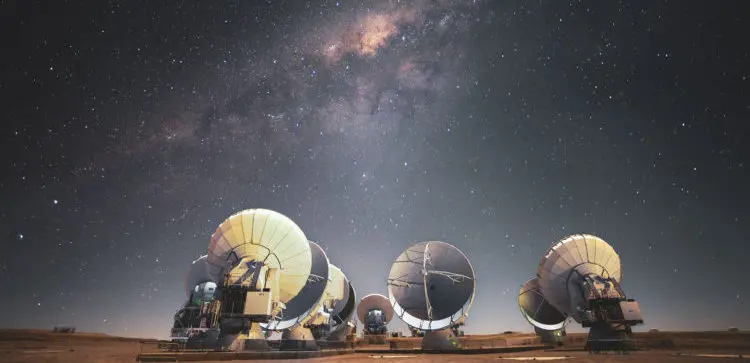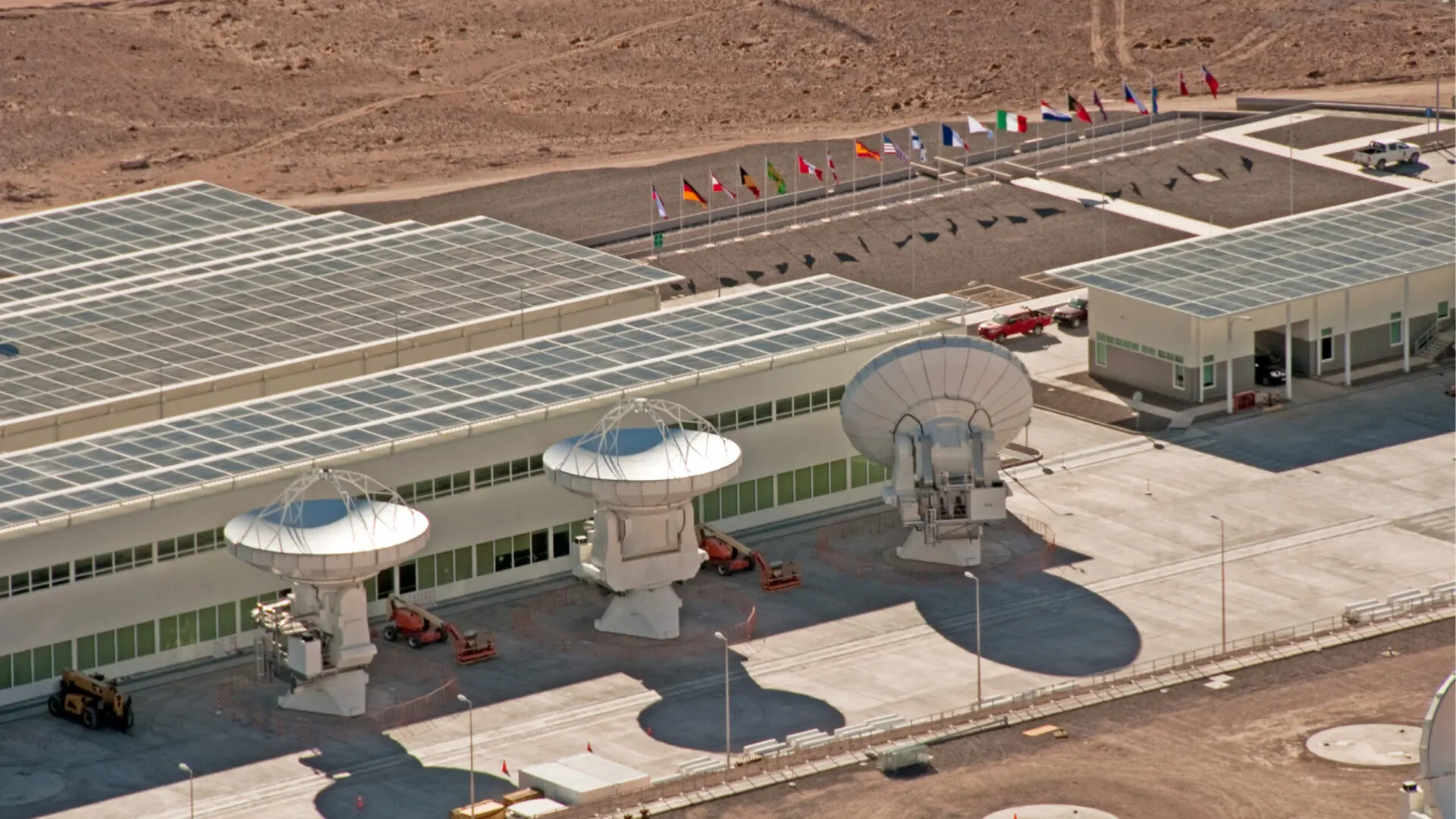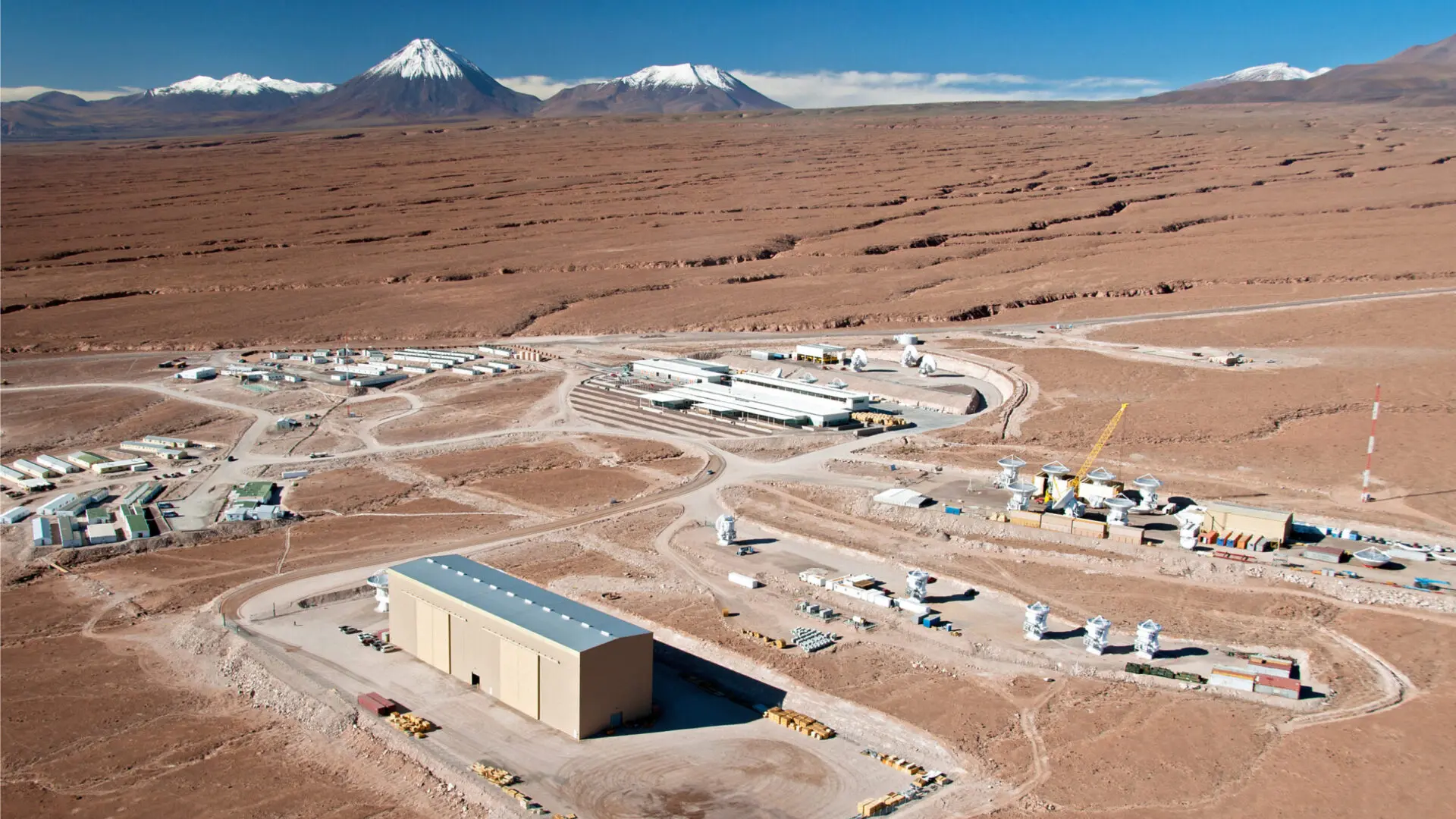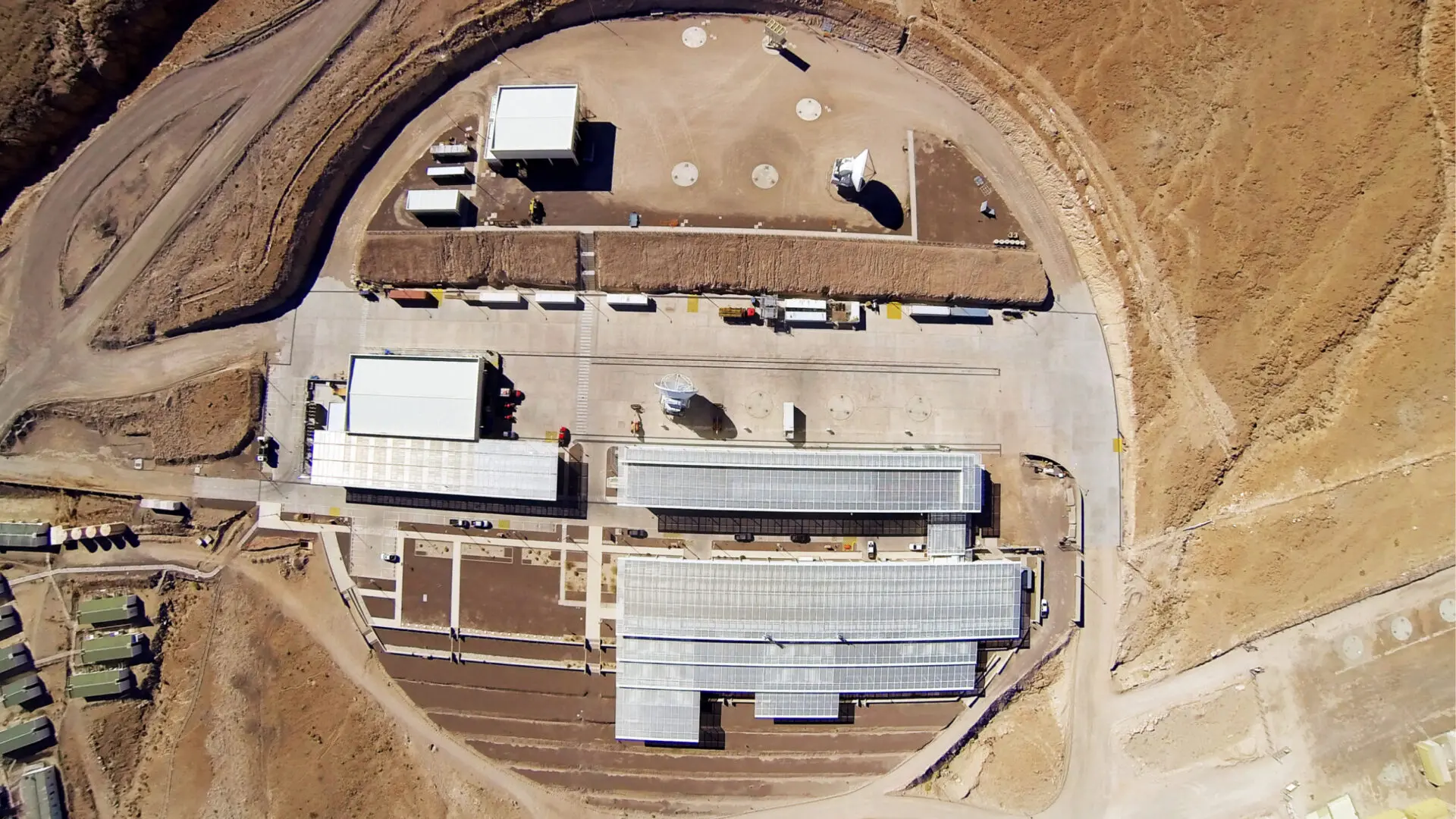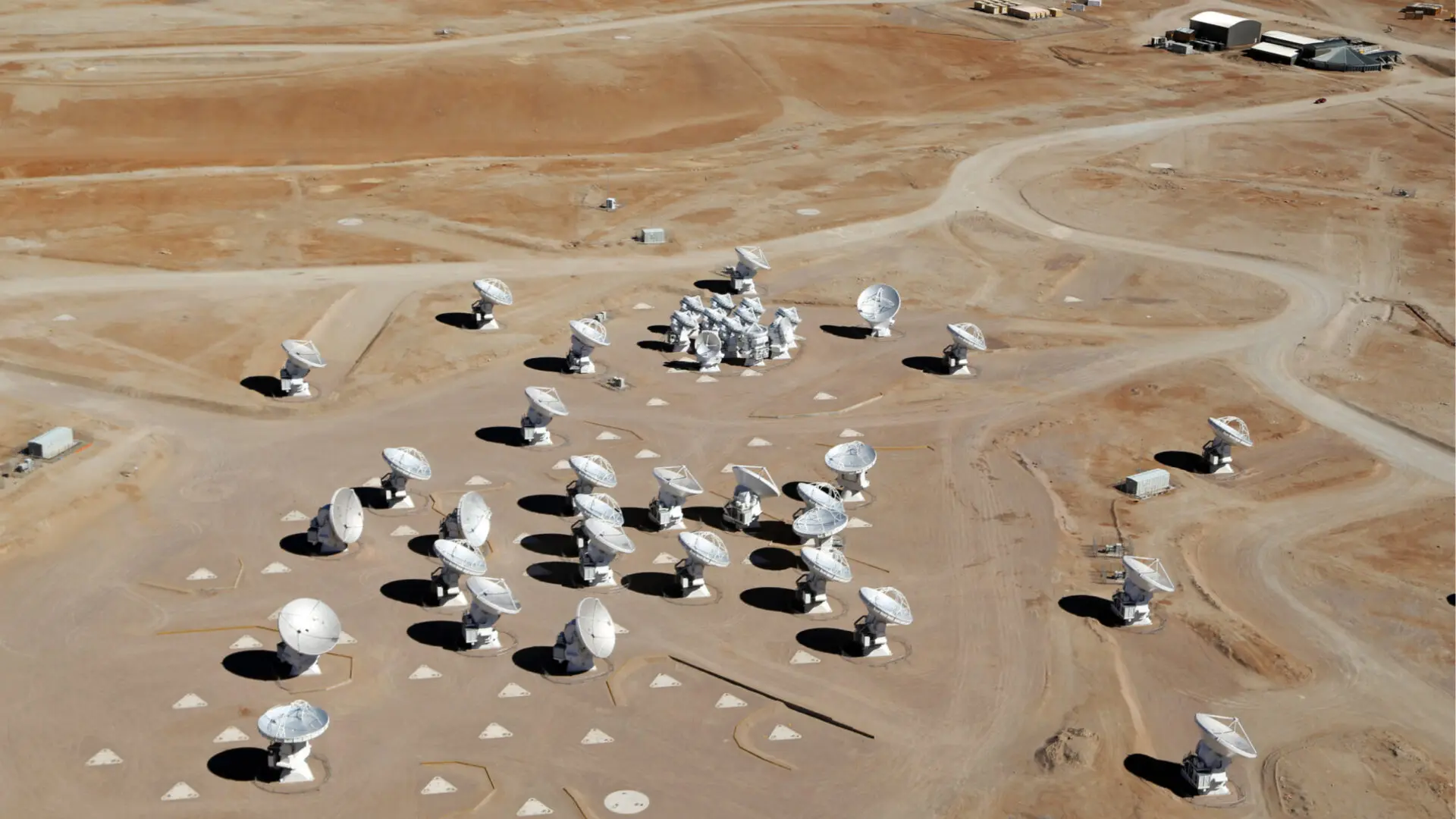
The Atacama Large Millimeter/submillimeter Array (ALMA), an international partnership of Europe, North America and East Asia in cooperation with the Republic of Chile, is the largest astronomical project in existence. ALMA will be a single telescope of revolutionary design, composed initially of 66 high precision antennas located on the Chajnantor plateau, 5000 meters altitude in northern Chile.
A panoramic view of the Chajnantor plateau showing the antennas of the Atacama Large Millimeter/submillimeter Array (ALMA) ranged across the unearthly landscape.
Credit: ALMA (ESO/NAOJ/NRAO), Tafreshi (ESO/twanight.org)
Indeed, while ALMA is located on one of the driest places on Earth, in very rare occasions snow can cover the 5,000 meter Chajnantor plateau where the antennas are located
Credit:ALMA(ESO/NAOJ/NRAO), C. Padilla(NRAO/AUI/NSF)
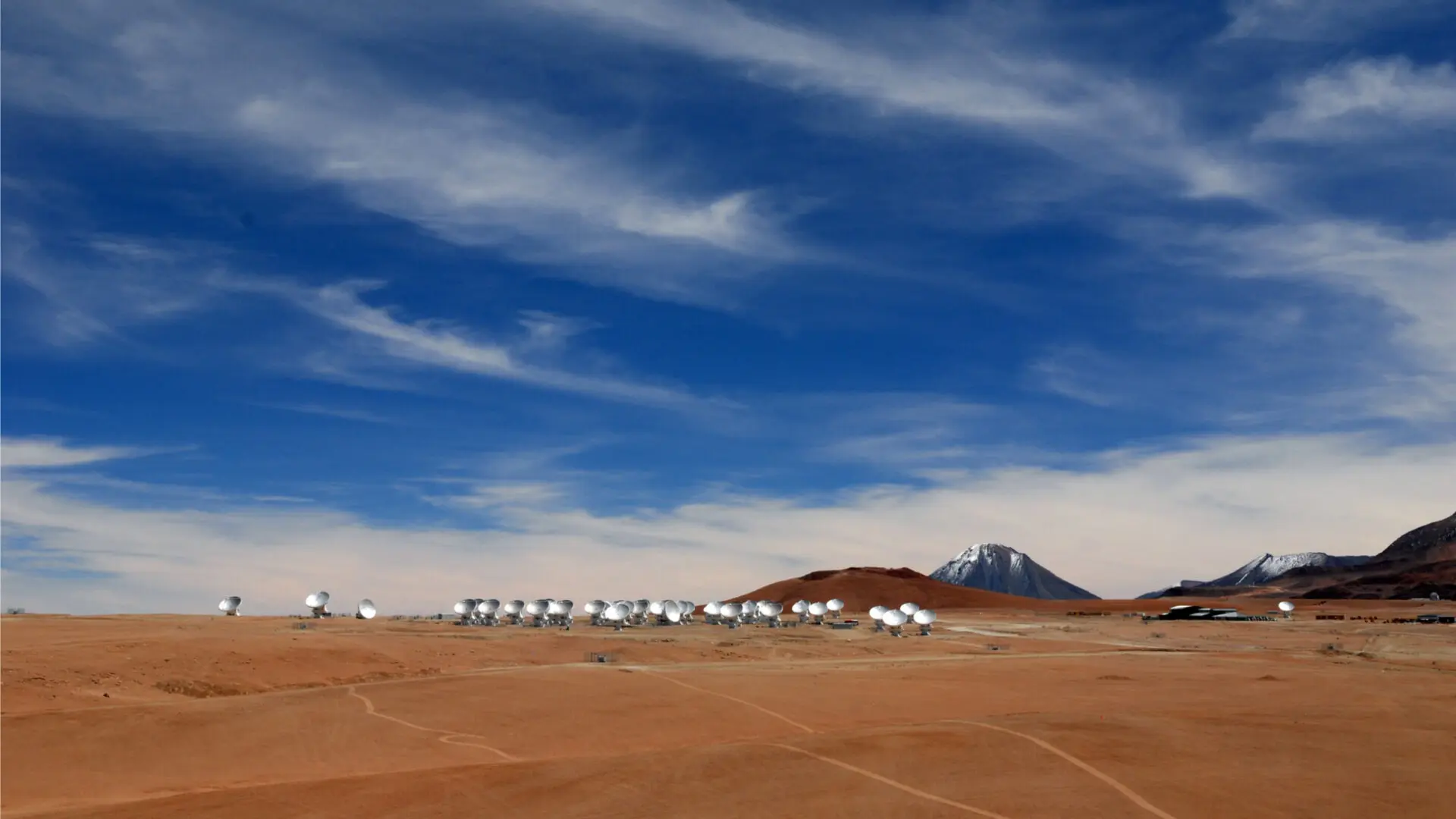
The cloudy sky is a consequence of the altiplanic winter, name given to a meteorological phenomenon that strikes the north of Chile every year during the southern hemisphere summer.
Credit:ALMA(ESO/NAOJ/NRAO), C. Padilla(NRAO/AUI/NSF)
The ALMA antennas scrutinize the mysteries of the universe 24 hours a day.
Credit:ALMA(ESO/NAOJ/NRAO), C. Padilla(NRAO/AUI/NSF)
The most powerful millimeter/submillimeter-wavelength telescope in the world opens for business and reveals its first image.
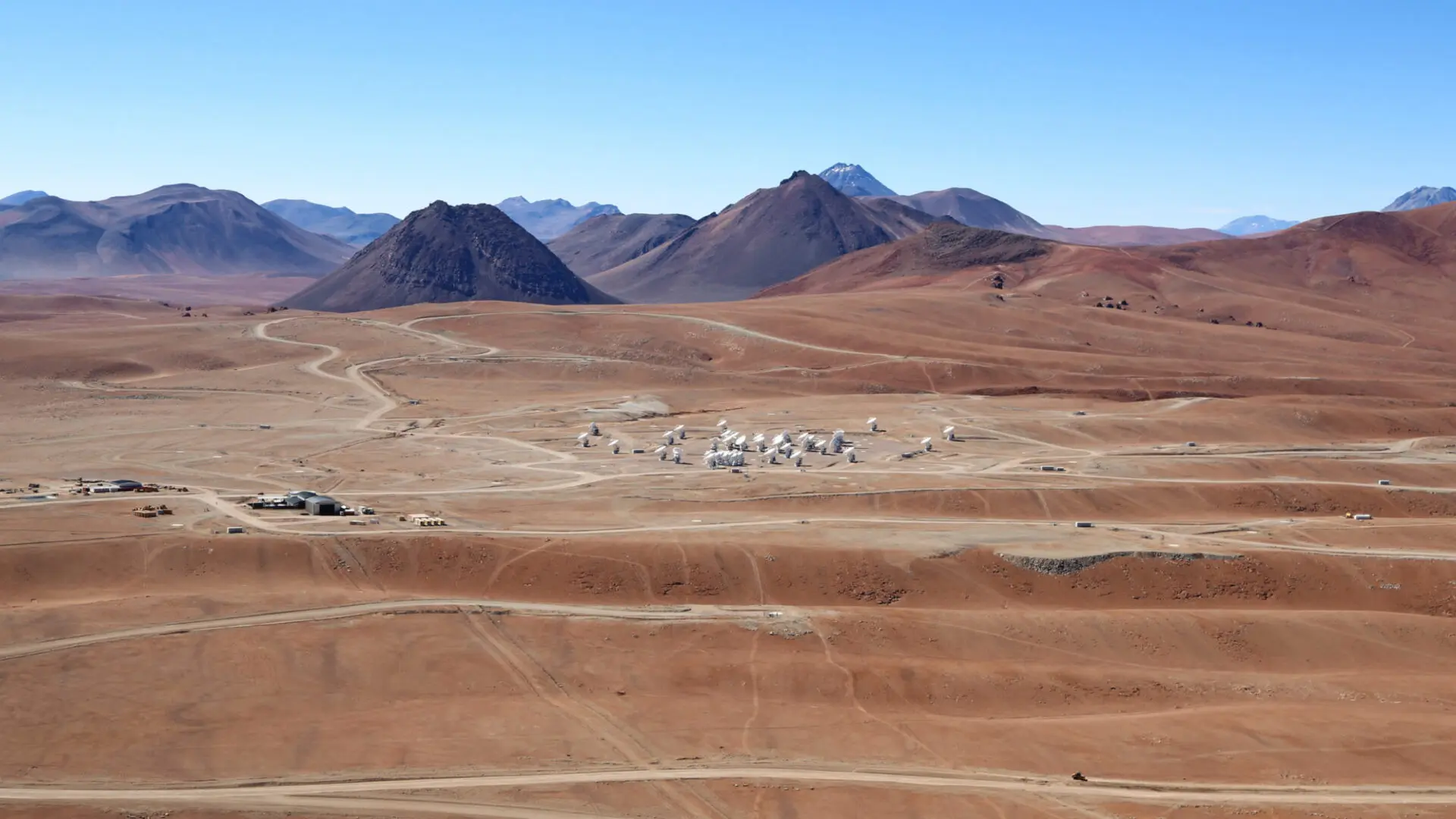
This picture of the ALMA antennas on the Chajnantor Plateau, 5000 m above sea level, was taken a few days before the start of ALMA Early Science.
Credit: ALMA (ESO/NAOJ/NRAO), W. Garnier (ALMA).