PRIISM brings fine details in ALMA data into sharper view
An imaging tool developed in Japan is revealing rings and gaps in planet-forming disks by recovering structure that conventional methods can blur
ALMA observations contain fine details that conventional imaging can blur. PRIISM, an open-source imaging tool developed by researchers in Japan, can recover some of that structure from the same data, without requiring new observations.
ALMA combines signals from many antennas to act as one large radio telescope. Its observations do not directly produce an image: they measure only part of the information needed to map an object’s emission. Astronomers use imaging methods to reconstruct a picture from those incomplete measurements.
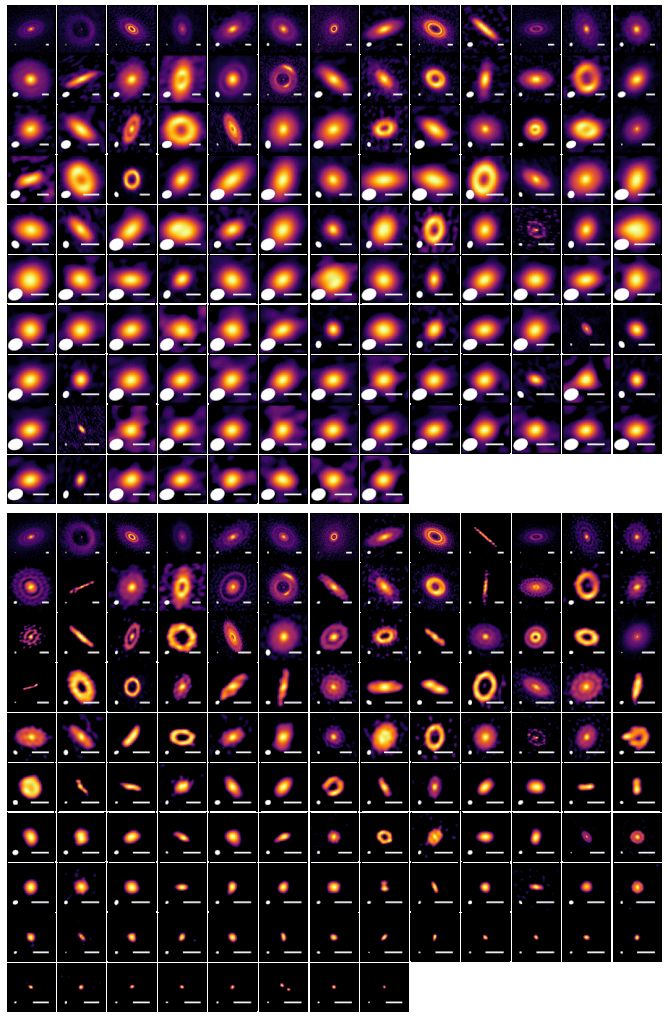
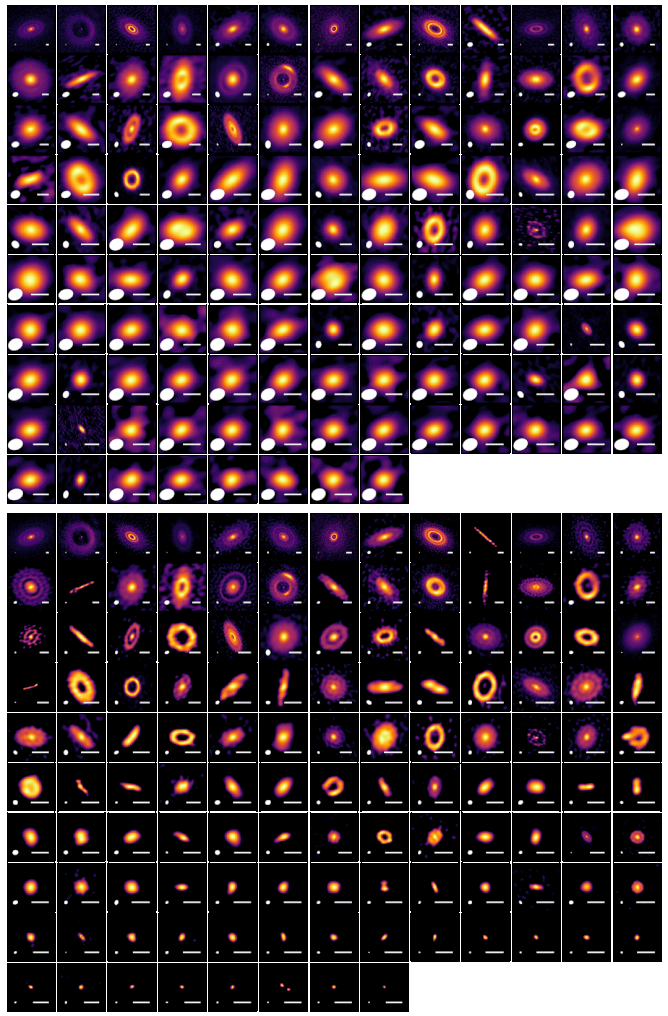
The widely used CLEAN method has been a standard approach in radio astronomy for about 50 years. Its final image undergoes a smoothing step, which can blur fine structures. PRIISM applies sparse modeling, a statistical approach that reconstructs an image consistent with the observations. It assumes the true image contains as little unnecessary structure as possible and varies smoothly. PRIISM also evaluates adjustable parameters against the data automatically, so the result does not depend on who performs the analysis.
Researchers have applied PRIISM to archival ALMA observations of protoplanetary disks—the disks of gas and dust around young stars where planets form. As planets grow, they are thought to carve gaps in the surrounding dust, making rings and gaps valuable clues to planet formation.
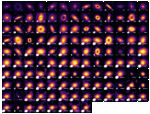
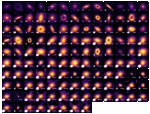
In a survey of 43 disks in the Taurus star-forming region, researchers identified 24 rings and gaps; half were detected for the first time with PRIISM. The measured widths and depths of the gaps are also consistent with models in which planets create them.
A separate study of 78 disks in the Ophiuchus star-forming region found that such structures can appear within a few hundred thousand years of the birth of their host stars. Detailed studies have also revealed new structures in disks in multiple-star systems, in a system hosting a very young planet, and around stars that undergo dramatic outbursts in brightness.
PRIISM works with ALMA’s standard data-analysis software and is available as open-source software. A new function, PRIISM-selfcal, which performs calibration and imaging simultaneously, has recently been released. The developers are also working to extend PRIISM to three-dimensional datasets that trace the motion of molecular gas and to objects beyond protoplanetary disks, such as galaxies. Applying new analysis techniques to ALMA’s vast archive is expected to further expand the scientific output of the observatory.
Additional Information
This announcement is based on the original publication by the National Astronomical Observatory of Japan (NAOJ), an ALMA partner on behalf of East Asia.
Related links:
ALMA is a partnership of ESO (representing its member states), NSF (USA), and NINS (Japan), together with NRC (Canada), NSTC and ASIAA (Taiwan), and KASI (Republic of Korea), in cooperation with the Republic of Chile. The Joint ALMA Observatory is operated by ESO, AUI/NRAO, and NAOJ.
Image
Contacts
-
Nicolás Lira Turpaud
Education and Public Outreach OfficerJoint ALMA Observatory, Santiago - ChilePhone: +56 2 2467 6519Cel: +56 9 9445 7726Email: [email protected]