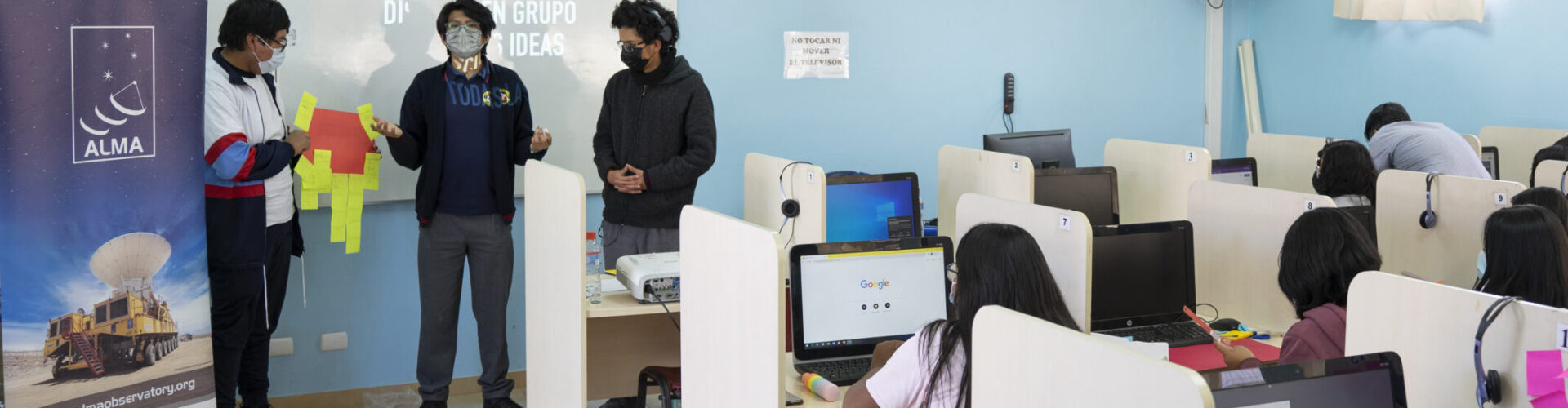
Atacama Makers connects science, technology, and territory at ALMA
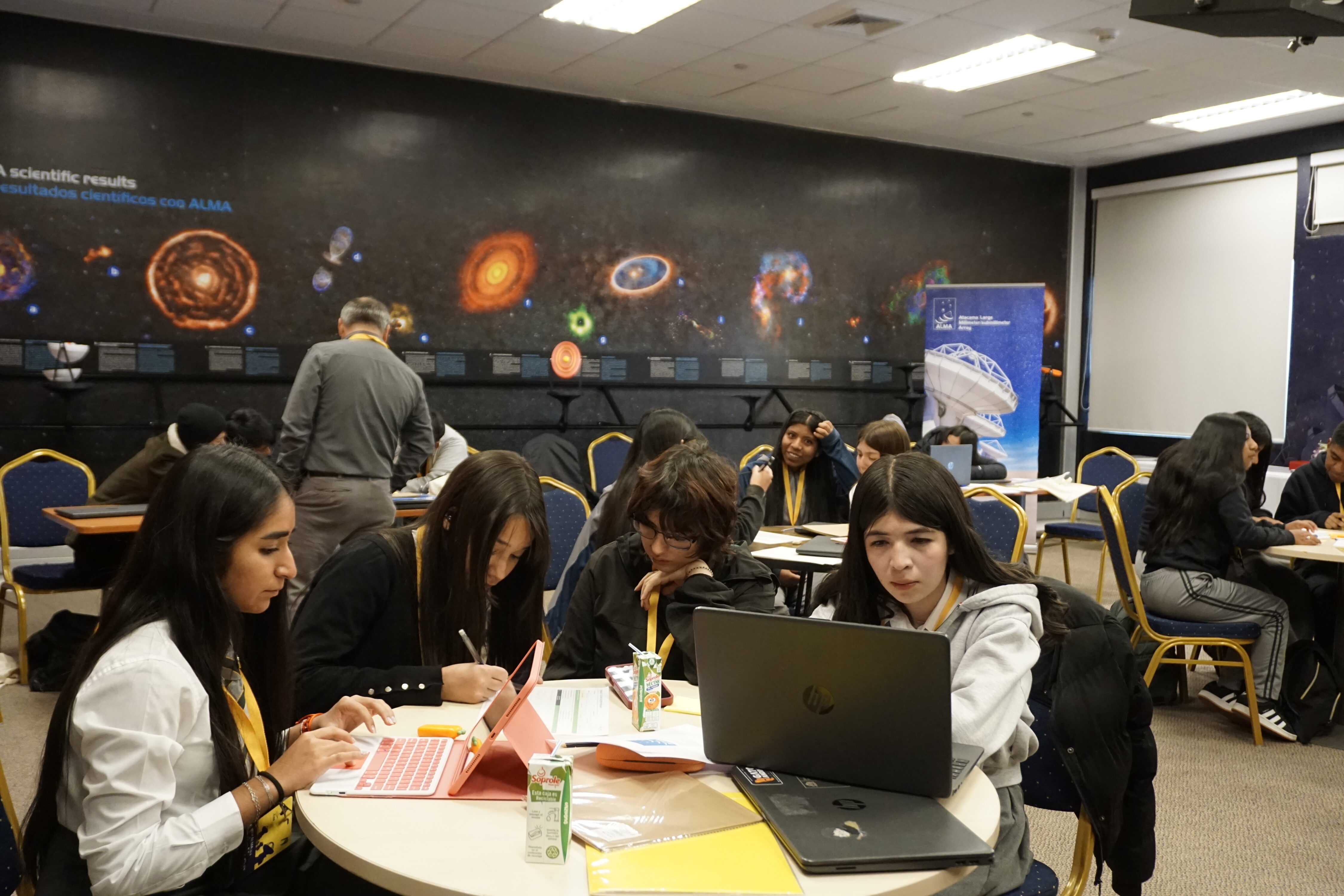
Thirty students from Toconao and San Pedro de Atacama took part in the first sessions of a special edition of the Atacama Makers program, held for the first time this year at the Atacama Large Millimeter/submillimeter Array (ALMA) facilities. Through programming, electronics, and innovation workshops, the young participants are creating technological solutions to the challenges facing their own communities.
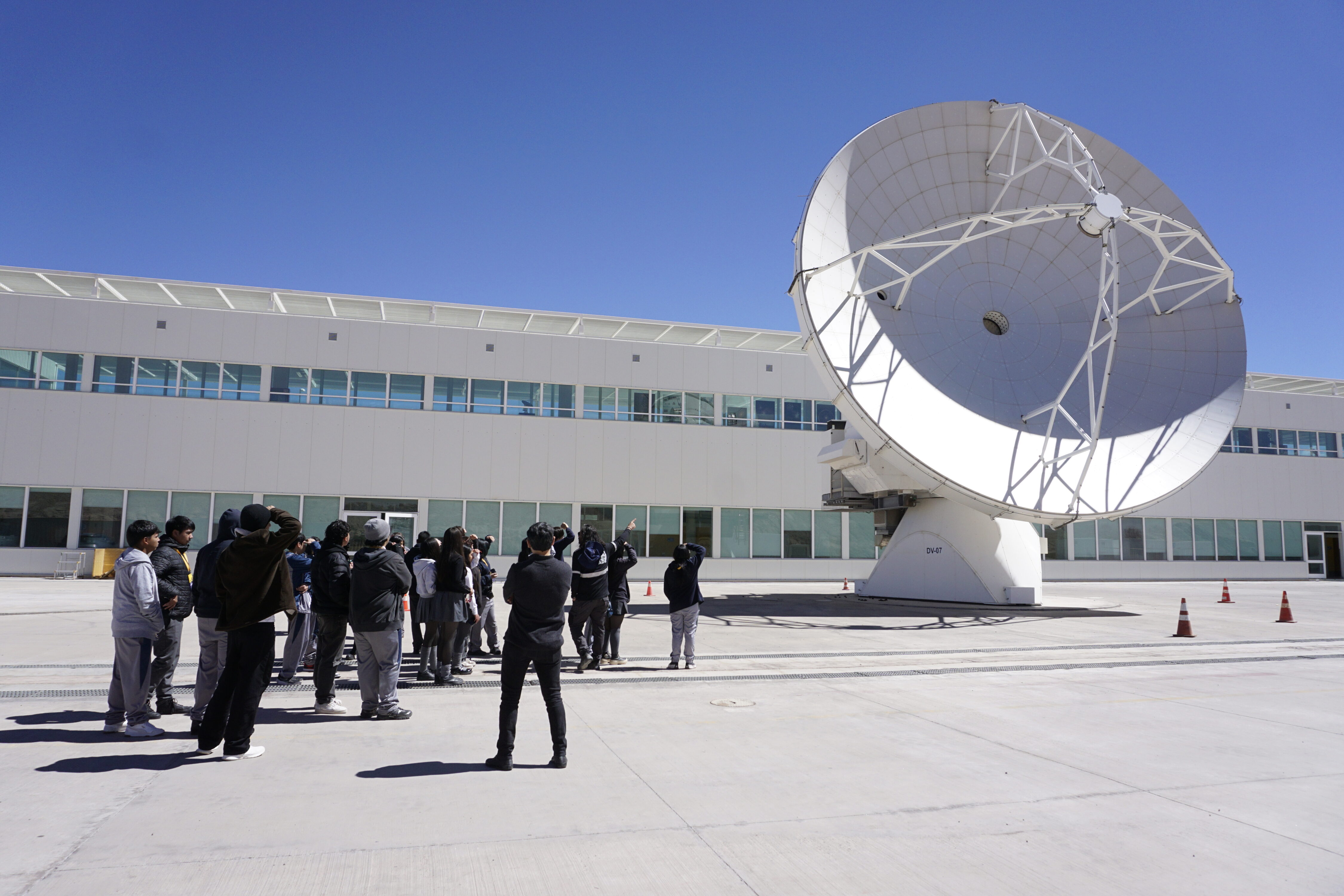
On August 26 and 27, students from Complejo Educacional Toconao and Liceo Bicentenario Agropecuario Likan Antai arrived at ALMA's facilities to take part in the first sessions of Atacama Makers 2026.
This edition marks a milestone for the program: for the first time, its workshops are being held at the observatory's facilities, directly connecting learning in science, technology, and innovation with the surrounding environment.
In total, 30 students participated,15 from each school, accompanied by teachers and by the team from HUMM, the organization responsible for developing and implementing the workshops in coordination with ALMA's community relations officer and its education and outreach team.
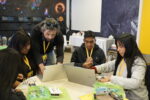
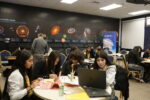
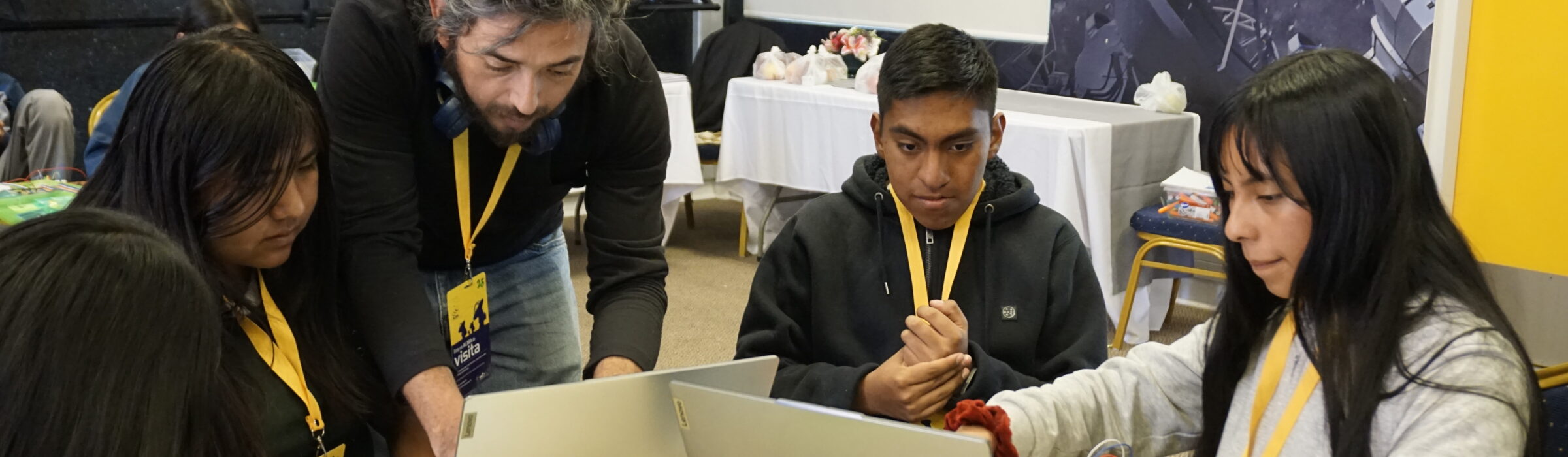
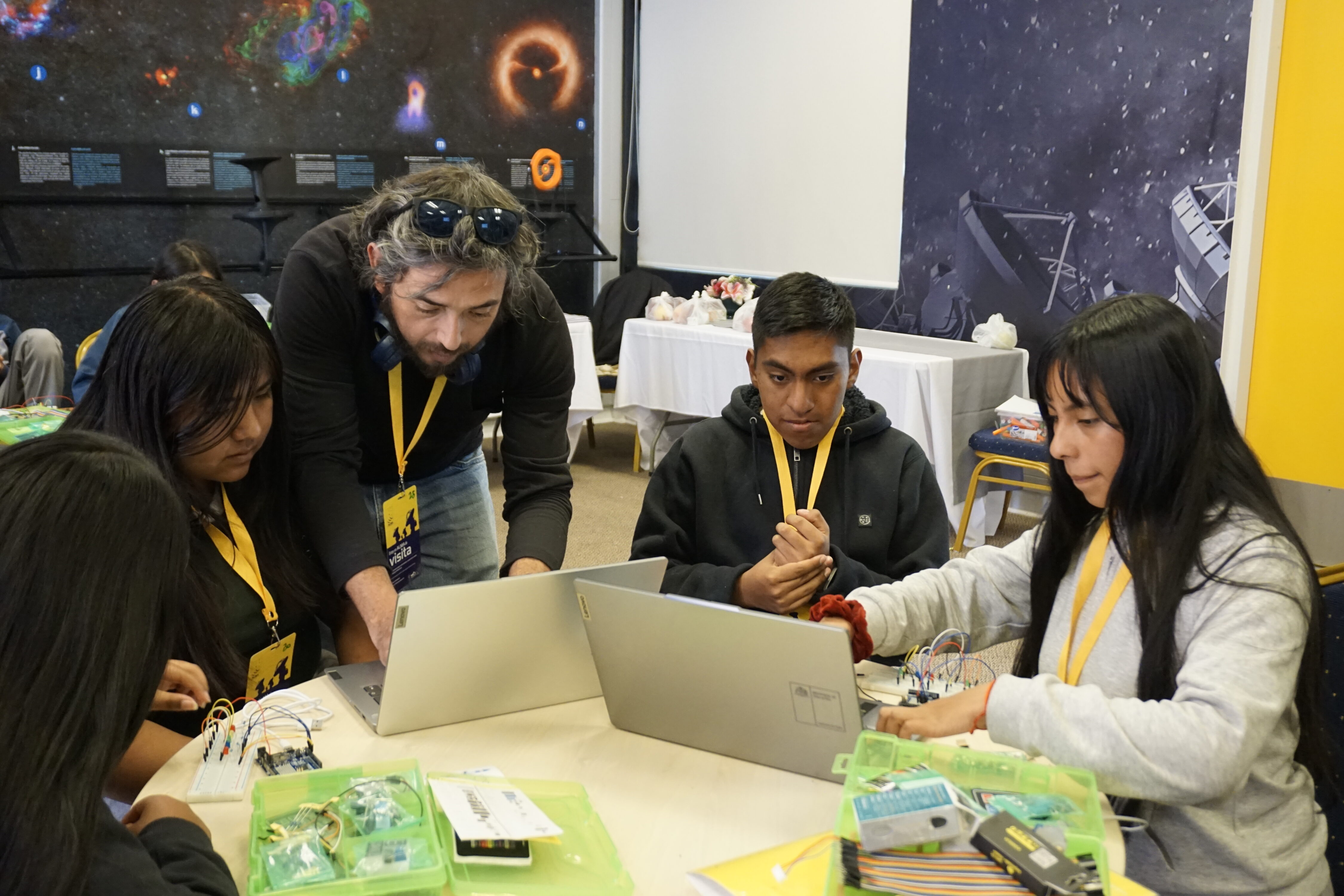
During the first sessions, the students had their first experiences with programming and electronics using Arduino kits. Through hands-on exercises, they learned to build circuits and program them to light up LEDs and activate various devices.
One of the most meaningful moments came precisely when the first circuits began working: a concrete experience that turned programming and electronics concepts into visible results created by the participants themselves.
"The maker concept is about making, executing, and bringing things to completion. That's why, in the end, they develop a prototype solution to the problem," explains Paulo Cisternas, director of HUMM.
The program aims to go beyond simply learning technological tools. Students identify problems in their surroundings and work on possible solutions using the knowledge gained during the workshops.
Among the ideas developed so far are systems to measure solar radiation, detect water fit for consumption, and protect animals from high temperatures—projects that link technology, creativity, and the challenges present in the communities of the region.
"I've learned to fall in love with the problem, not the solution. A lot of times you look for the quick fix, but that's not it. That might be the easy path, but you don't really think through the problem," says Nataniel Cervantes, a sophomore at Liceo Bicentenario Agropecuario Likan Antai.
Along with his team, Nataniel is working on a project about ultraviolet radiation exposure at his school. "We want to encourage our school to do something about the lack of shade, since radiation causes skin and eye damage. We want to push for a solution before we graduate, in two years, because no one has worked on this before."
"I believe an experience like this has a greater impact when it grows out of concerns and challenges that the students themselves recognize in their communities. When ideas come from the reality of each locality, the solutions make more sense, have greater impact, and connect more directly with the needs of the people who live there," says Catalina Margulis, ALMA's Corporate Secretary, in charge of community relations.
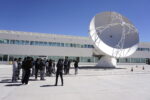
The experience also included a tour of ALMA and a visit to its antennas. Getting a close-up look at the observatory allowed participants to engage with the world of science and technology from a space usually associated with frontier astronomical research.
For ALMA, the initiative is part of its commitment to bringing scientific and technological education opportunities to the communities in its surroundings, and to helping new generations imagine themselves actively participating in fields such as science, engineering, programming, and innovation.
Atacama Makers will continue with two more sessions in September. In the final session, students will present their projects to members of the ALMA team, closing out a process in which they must take their ideas from identifying a problem all the way to developing a technological proposal to address it.
Additional Information
ALMA is a partnership of ESO (representing its member states), NSF (USA), and NINS (Japan), together with NRC (Canada), NSTC and ASIAA (Taiwan), and KASI (Republic of Korea), in cooperation with the Republic of Chile. The Joint ALMA Observatory is operated by ESO, AUI/NRAO, and NAOJ.
Images
Contacts
-
Nicolás Lira
Education and Public Outreach OfficerJoint ALMA Observatory, Santiago - ChilePhone: +56 2 2467 6519Cel: +56 9 9445 7726Email: [email protected]